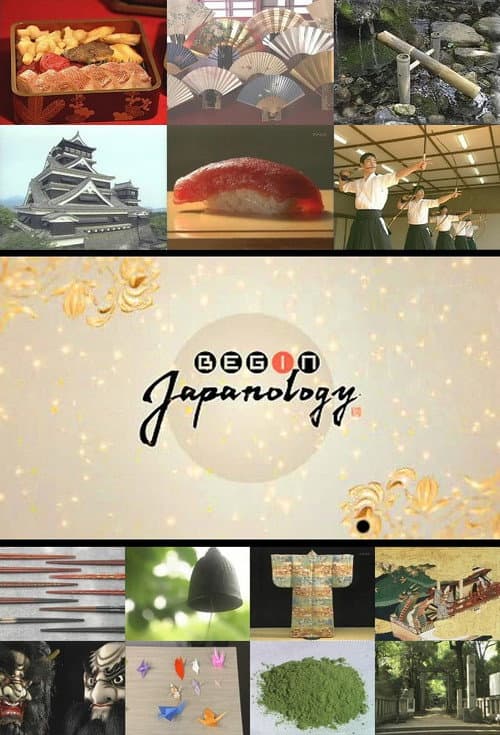
About this season
BEGIN Japanology invites you into the world of Japanese culture, both traditional and modern, explaining how traditions evolved and the part they still play today in people's everyday lives.
Episodes (41)
1. Nishijin-ori
Aired 19 January 2009 • 28 min
2. Kyoto Lacquerware
Aired 26 January 2009 • 28 min
3. Sake
Aired 2 February 2009 • 28 min
4. Katsura Rikyu
Aired 9 February 2009 • 28 min
5. Bonsai
Aired 16 February 2009 • 28 min
6. The Four Seasons
Aired 23 February 2009 • 28 min
7. Hina Dolls
Aired 2 March 2009 • 28 min
8. Nagasaki
Aired 9 March 2009 • 28 min
9. Five-Storey Pagodas
Aired 16 March 2009 • 28 min
10. Cherry Blossoms
Aired 23 March 2009 • 28 min
11. Chopsticks
Aired 3 April 2009 • 28 min
12. Aizome
Aired 10 April 2009 • 28 min
13. Bunraku
Aired 17 April 2009 • 28 min
14. Kiriko Cut Glass
Aired 24 April 2009 • 28 min
15. Traditional Folk Houses
Aired 8 May 2009 • 28 min
16. Tea Ceremony
Aired 15 May 2009 • 28 min
17. Soba
Aired 22 May 2009 • 28 min
18. Origami
Aired 29 May 2009 • 28 min
19. Imari Porcelain
Aired 5 June 2009 • 28 min
20. Folding Fan
Aired 19 June 2009 • 28 min
21. Kaiseki Cuisine
Aired 10 July 2009 • 28 min
22. The Sounds of Japan
Aired 17 July 2009 • 28 min
23. Masks
Aired 24 July 2009 • 28 min
24. Satoyama
Aired 31 July 2009 • 28 min
25. Kendo
Aired 29 August 2009 • 28 min
26. The Fragrances of Japan
Aired 4 September 2009 • 28 min
27. Spinning Tops
Aired 11 September 2009 • 28 min
28. Rock and Stone
Aired 18 September 2009 • 28 min
29. Ink Brushes
Aired 25 September 2009 • 28 min
Since ancient times, people in Japan have devoted themselves to the traditional art of calligraphy, shodo. Writing characters with ink on paper, they create works that express the inherent beauty of the Japanese written language. In shodo, brushes are used for applying the ink to the paper. The expressiveness of the characters derives from variations in the speed and force that the calligrapher uses to move the brush. The brushes themselves are simple objects, made from bundles of animal hair or other materials bundled together and fixed to a shaft. The actual materials used will depend on the style of calligraphy that is desired. On this edition of BEGIN Japanology, we examine the history, development and contemporary applications of ink brushes, introducing these simple implements that have been so essential to the development of Japanese writing and painting.
30. Tsukemono
Aired 2 October 2009 • 28 min
31. Dogs
Aired 9 October 2009 • 28 min
32. Ramen
Aired 16 October 2009 • 28 min
33. Rice
Aired 23 October 2009 • 28 min
34. Shinto Shrine
Aired 30 October 2009 • 28 min
35. Festivals
Aired 6 November 2009 • 28 min
In Japan, festivals are known as matsuri. Many matsuri are colorful and boisterous occasions. Matsuri are typically associated with a Shinto shrine. Local people gather to pray and give thanks to the enshrined deity for agricultural bounty, health, safety and security. Over the years, these gatherings have evolved into elaborate events that frequently feature dancing, masks and magnificent floats. Entire local communities may be drawn into the preparations for festivals, which have nurtured some of the most refined arts and crafts in Japan. Even the sophisticated Noh theatre has festival origins, and, in some communities, apprentices will spend years learning a craft such as woodcarving specifically for its application in an annual matsuri. On this edition of BEGIN Japanology, we present some of the most famous festivals in Japan and consider the links to community and culture.
36. Shinkansen
Aired 13 November 2009 • 28 min
37. Gagaku
Aired 20 November 2009 • 28 min
38. Marriage
Aired 27 November 2009 • 28 min
39. Shogi
Aired 4 December 2009 • 28 min
40. Nabe Cuisine
Aired 11 December 2009 • 28 min
41. Sword
Aired 18 December 2009 • 28 min