About this season
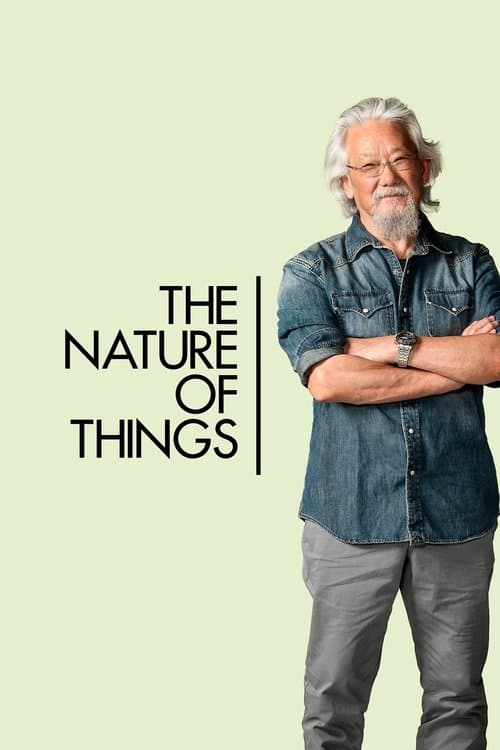
The Nature of Things is a Canadian television series of documentary programs. It debuted on CBC Television on November 6, 1960. Many of the programs document nature and the effect that humans have on it. The program was one of the first to explore environmental issues, such as clear-cut logging. The series is named after an epic poem by Roman philosopher Lucretius: "Dē Rērum Nātūrā" — On the Nature of Things.
Episodes (24)
1. The Bear Man of Kamchatka
Aired 11 October 2007
Canadian bear expert Charlie Russell rescues two orphaned cubs destined for death in a squalid Russian zoo and secrets them away to his home in the remote wilds of the South Kamchatka peninsula, in the former Soviet Union.
2. Living Forever: The Longevity Revolution
Aired 18 October 2007
Explorer the ongoing quest to extend human life, the cutting-edge research and the latest discoveries.
3. Weather Report
Aired 25 October 2007
Climate change is irrevocably altering the world as we know it, challenging our sense of the future and the fundamental values of our industrial societies.
4. Game Over: Conservation in Kenya
Aired 1 November 2007
Explore the impact of both colonial and contemporary initiatives in Kenya and how they affect the peoples who have traditionally lived off the land.
5. The Man with the Golden Cells
Aired 8 November 2007
The emerging world market in living cells, where an individual's genes can be bought and sold as commodities.
6. The Nature of Things Magazine
Aired 15 November 2007
Witness the exciting lead up to the launch of the new High Speed One service out of St. Pancras Station, in London. A look at the Large Hadron Collider, the largest and most sophisticated machine ever constructed by science. And an interview with musician and environmentalist, Sarah Harmer.
7. Climate Change I: An Uncertain Future
Aired 22 November 2007
Now that climate change is an accepted, if inconvenient, truth, how are we coping? David Suzuki takes a first-hand look at how climate change is affecting Canadians where it really hurts: in their ability to make a living.
8. Climate Change II: Hot Times in the City
Aired 29 November 2007
Hot Times in the City takes the pulse of three major Canadian cities: Vancouver, Toronto and Halifax, as they grapple with one of the planet's greatest threats to human health: global warming.
9. The Nature of Things Magazine
Aired 6 December 2007
A look into the multi-billion dollar underworld of counterfeit drugs, the tale of the Lunokhod a self-propelled robot on the Moon that could be controlled from the Earth and an interview with Boston Bruins' defenseman, Andrew Ference.
10. The Edge of Eden – Living with Grizzlies
Aired 6 January 2008
11. The Science of the Senses: Hearing
Aired 10 January 2008
In Hearing, episode one of The Science of the Senses, finding the answer to that question will take us on a journey through the ear, into the brain and right into the heart of the human psyche.
12. The Science of the Senses: Touch
Aired 17 January 2008
In The Science of the Senses: Touch we will take a journey through the skin, into the subcutaneous world of our sensory receptors and up into the brain as we explore the hidden language of our most essential sense.
13. The Science of the Senses: Smell/Taste
Aired 24 January 2008
In this episode of The Science of the Senses, we explore how smell combines with taste, somewhere in our brain, to create the perception of flavour. Most people wrongly assume that taste dominates. But what actually allows us to differentiate one food from another beyond the basics of sweet, sour, salty, savory and bitter, is the aroma.
14. The Science of the Senses: Sight
Aired 31 January 2008
This episode takes viewers on a fascinating tour of our visual world, from the moment light enters our eyes, to the way this information is transformed into electrical impulses and decoded by our brain - the domain of "visual perception". The act of "seeing" takes an immense amount of brainpower, more than 65% of the brain's neural pathways.
15. Wild China: Heart of the Dragon
Aired 22 June 2008
Explores how China's 1.3 billion people interact with their extraordinary wildlife and landscapes.
16. Wild China: Shangi-La
Aired 28 June 2008
Beneath billowing clouds in China's far southwest, rich jungles nestle below towering peaks and jewel-coloured birds and ancient tribes share forested valleys where wild elephants still roam.
17. Wild China: The Tibetan Plateau
Aired 29 June 2008
Explore the vast windswept wilderness in one of the world's most remote places - the size of Western Europe.
18. Wild China: Land of the Panda
Aired 5 July 2008
Travel across China's heartland where its Han people are the centre of a 5,000-year-old civilization.
19. Wild China: Beyond the Great Wall
Aired 12 July 2008
Warrior nomads, bizarre wildlife and extreme weather conditions are found beyond the Wall, built by China's emperors.
20. Wild China: Tides of Change
Aired 13 July 2008
China's coast is an area of huge contrast-from futuristic modern cities jostling traditional seaweed-thatched villages to ancient tea terraces and wild wetlands where rare animals still survive.
21. Antarctic Mission: Islands at the Edge
Aired 20 July 2008
The SEDNA IV sails across the Polar Front, an area where cold turbulent Antarctic waters meet warmer water from the north - one of the earth's last great refuges for wildlife.
22. Antarctic Mission: Window on a Changing Climate
Aired 27 July 2008
Antarctica's inhabitants are telling us that their world is changing in complex and subtle ways. The once successful colonies of diminutive Adelie penguins are declining because of increased snowfall - one of the unexpected consequences of a warmer climate.
23. Antarctic Mission: The Great Ocean of Ice
Aired 3 August 2008
A cold and mysterious world that is home to some of the toughest and most unusual creatures on the planet: giant ribbon worms, dragon fish, and ancient sponges.
24. Antarctic Mission: The Last Continent
Aired 30 August 2008
Follow mission leader Jean Lemire and his crew as they endure 17 months on the expedition to measure the threat posed by global warming in the Antarctic - a place where the Earth is particularly vulnerable.