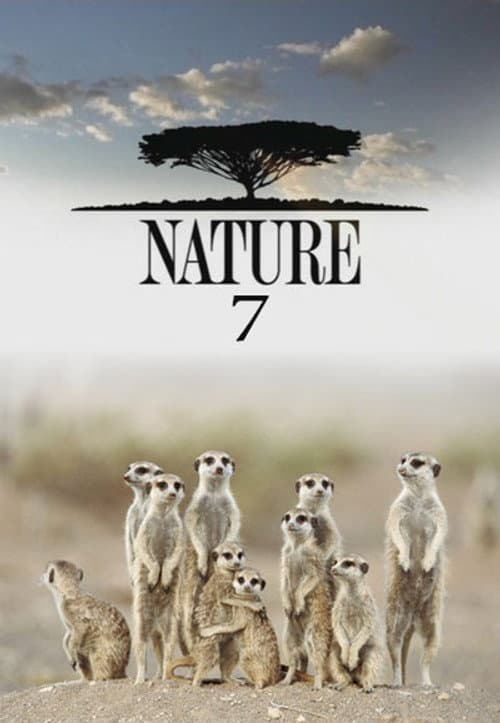
About this season
Consistently stunning documentaries transport viewers to far-flung locations ranging from the torrid African plains to the chilly splendours of icy Antarctica. The show's primary focus is on animals and ecosystems around the world. A comic book based on the show, meant to be used an as educational tool for kids, was briefly distributed to museums and schools at no cost in the mid-2000s.
Episodes (20)
1. Bonebreakers' Mountain
Aired 9 October 1988 • 53 min
An exploration of the Spanish Pyrenees mountains and the bearded "bonebreaker" vulture that lives in this harsh environment.
2. Extremadura: Spain's Forgotten Forest
Aired 16 October 1988 • 53 min
Explores Spain's Extremadura, an oak forest and wilderness plain, home to griffin vultures, imperial eagles, genets and other animals native to Africa.
3. Peacock's War
Aired 30 October 1988 • 53 min
Former Vietnam medic Doug Peacock lives as a firewatcher and conservationist in Montana's Glacier National Park.
4. Nature of Australia: a Portrait of the Island Continent: A Separate Creation
Aired 13 November 1988 • 53 min
Examines marsupials and others animals which have evolved because of Australia's isolation from the rest of the world.
5. Nature of Australia: a Portrait of the Island Continent: Seas Under Capricorn
Aired 20 November 1988 • 53 min
Two distinct marine worlds meet in the waters that encircle Australia. In its long voyage into isolation following its breakaway from Gondwana, 45 million years ago, the island continent came to span both tropical and temperate seas. Today its shores are ringed by the most diverse assemblies of marine life on earth. This program recounts the making of this unique Australia down under, from the storm tossed kelp forests of the cool south, to the magic splendours of the Great Barrier Reef. The program begins its story where Australia was born, in the southern latitudes of the Antarctic seas. Antarctica is the last remnant of Gondwana - it froze over after the other continents broke away, but its cool rich waters still generate a wealth of nutrients which, carried by the deep currents, sustain Australia's marine life.
6. Nature of Australia: a Portrait of the Island Continent: the Making of the Bush
Aired 27 November 1988 • 53 min
A koala up a gumtree is the classic image of the Australian bush. How that odd partnership evolved is one of the strands woven into this episode of Nature Of Australia. The program tells the story of how the island continent's wooded margins came to be dominated by one unique type of tree growing in a great variety of forms - the eucalypt. The nursery for nearly all life in Australia is the rainforest, of which only a few patches remain today - th last remnants of vast, dense forests that covered Australia when it first broke away from the ancestral super-continent of Gondwana, and voyaged north into isolation. From among its proliferation of plants emerged the eucalypts, the characteristic gum trees - and from among the forest animals arose a great and varied company of marsupials, adapting to every kind of environment that evolved in response to Australia's changing, drying climate.
7. Nature of Australia: a Portrait of the Island Continent: the Sunburnt Country
Aired 4 December 1988 • 53 min
Australia's arid interior is often called the dead heart. In fact, it teems with life, supported by a hidden network of buried rivers recharged by rare but heavy rains. This episode tells the story of this surprising desert - formed when the climatic change overtook and dried out central Australia. What was once a land of vast lakes and broad rivers turned into a parched region of glittering stone and burning sand, interwoven with swathes of hardy woodland and plains of desert grass. A great variety of plants and animals has adapted to life in the arid centre, with its swings between the brief good condition that follow the unpredictable rains, and then long periods of drought. It's the land of the lizards - from giant goannas that sniff out snakes hiding under the sand, to the tiny, delicate Lake Eyre dragons who've made the desolate saltpans their domain.
8. Nature of Australia: a Portrait of the Island Continent: the Land of Flood and Fire
Aired 11 December 1988 • 53 min
Australia's northward drift slowed down when it collided with Asia about 15 million years ago - in the upheavals, chains of islands were thrust up and eventually they became the stepping stones for an invasion that would change the face of Australia. With the arrival of the first humans - at least 50,000 and possibly as long as 120,000 year ago - a new force entered the continent to shape the fortunes of its plants and animals. The first landfall was on the far north coast of Australia, a rich and tropical region ruled by the annual monsoonal rains. This program tells the story of Australia's top end, where the first Aboriginal people arrived, settled, and perfected the use of fire as a means to manage the landscape.
9. Nature of Australia: A Portrait of the Island Continent: End of Isolation
Aired 18 December 1988 • 53 min
Modern Australians want to recapture the Aborigines ability to live harmoniously with indigenous plants and animals.
10. Night Hunters
Aired 8 January 1989 • 53 min
The different types of owls and the characteristics which make them ideal birds of prey.
11. Beyond Timbuktu
Aired 5 February 1989 • 53 min
Wildlife artist Bruce Pearson sketches the various bird species found in the arid lands of Western Africa's Mali, through which the River Niger flows.
12. Under the Emerald Sea
Aired 19 February 1989 • 53 min
Explores the Pacific Ocean off the coast of Vancouver, B.C.
13. Wild Waterfalls
Aired 26 February 1989 • 53 min
Explores the variety of local environments found around waterfalls in Africa, South and North America.
14. Meerkats United / The Bee-Team
Aired 5 March 1989 • 53 min
Profiles of the Kalahari Desert's gray meerkat or mongoose, and a Kenyan colony of bee-eater birds.
15. Icebird
Aired 12 March 1989 • 53 min
The Adelie penguin is observed at the Cape Bird nesting site on Antarctica's Ross Island.
16. Mozu the Snow Monkey
Aired 19 March 1989 • 53 min
Chronicling the life of "Mozu the Snow Monkey," a macaque with deformed limbs that's survived harsh winters in Japan's highlands to raise seven offspring. The complex social structure among the primates is documented.
17. The Everglades: Rain Machine
Aired 26 March 1989 • 53 min
Examines the role computers play in managing the Everglades and whether this vital freshwater marsh will survive the effects of diking, draining and development.
18. Islands in the Sky
Aired 16 April 1989 • 53 min
Unique animals and plants flourish atop mist-shrouded Venezuelan plateaus thousands of feet above the surrounding jungle.
19. Rulers of the Wind
Aired 30 April 1989 • 53 min
Scientists study birds of prey, creatures historically admired and hated, as indicators of environmental damage.
20. Kariba: the Lake that Made a Dent
Aired 14 May 1989 • 53 min
Wildlife flourishes around the manmade lake conservationists denounced 30 years ago at its creation.